
Past Conferences & Proceedings
The 7th International Conference on Public Health & Well – Being 2025 was successfully held virtually on 16th – 17th October 2025 in Bangkok, Thailand, as a hybrid (online and in-person) event. The conference was organized by iConferences, Sri Lanka in partnership with the Faculty of Medicine, Andalas University, Indonesia. This year’s conference, under the theme “Future of Public Health in the 21st Century” This conference aims to explore emerging trends, challenges, and opportunities shaping the future of public health. Together, we will delve into innovative strategies and solutions to improve health outcomes and equity worldwide.
Participants from countries including USA, UK, Australia, Myanmar, USA, Qatar, Taiwan, Indonesia, South Africa, Malaysia, Japan, India, Sri Lanka, Ethiopia and many others contributed to a vibrant exchange of ideas and research. The event featured keynote and plenary forums, technical sessions, and an award ceremony recognizing outstanding contributions.

Dr. Hannah Degge
Conference Chair
Health Promotion and Public Health, Faculty of Medicine and School of Health Sciences, University of Nottingham, United Kingdom
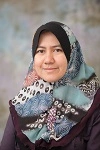
Prof. Madya, Dr. Haliza Abdul Rahman
Conference Co-Chair
” From Crisis to Prevention: Shaping Public Health for the Next Generation”
Department of Environmental & Occupational Health, Faculty of Medicine and Health Sciences, University Putra Malaysia
Technical Sessions
Session 1 - Health & Mental Well-Being
The session titled “Health & Mental Well-Being” explored a wide spectrum of research addressing physical and psychological health, cultural contexts, and systemic inequities. The presentation “Associations Between Faith School Attendance and Mental Health Outcomes in Adolescence and Adulthood: Evidence from the ALSPAC Cohort in Southwest England” examined the long-term mental health effects of educational environments. Another study, “Australia’s Stolen Generation: Examining the Health Outcomes of Adverse Childhood Experiences on Aboriginal and Torres Strait Islander Survivors,” highlighted the deep health impacts of historical trauma on Indigenous populations. “Supporting Youth Well-Being: A Qualitative Study of Key Factors Shaping Mental Health Among Young People in Myanmar” analyzed youth resilience and challenges in mental health within Southeast Asia. The session also included innovative public health research, such as “Pioneering Approaches to Airborne Pathogen Control” and “A Multi-Stakeholder Approach to Hospital Resilience: Integrating Social Capital,” emphasizing collaborative strategies for health system preparedness. Further studies like “Culturally Competent Nurses Improve Patient Satisfaction” and “Universal Coverage, Unequal Protection: Disparities in Diabetes Care Among Indonesia’s Aging Population Under National Health Insurance (2015–2023)” shed light on healthcare disparities and the importance of inclusive care. Concluding with “The Impact of Community Development to Improve Modern Contraceptive Use in ASEAN: A Systematic Literature Review,” the session underscored the significance of community-driven initiatives and culturally responsive health systems in promoting overall well-being.
Technical Sessions
Poster Session
The Poster Session presented a wide range of research focused on health behaviors, mental well-being, and community health. “Cannabis Use Risk Levels and Challenges to Changing Use Among College Students” examined the behavioral risks and barriers to change among young adults. “The Association Between Household Food Security and Urinary Phthalate Metabolite Concentrations” explored links between nutrition, environmental exposure, and health outcomes. “Investigating the Link Between the Community Health Promoter Role, Personal Intra-Household Dynamics and Mental Wellbeing in a Nairobi Informal Settlement” highlighted the psychosocial complexities of community health work. “Dissemination of Health Information in the South Asian Diaspora: A Qualitative Study of Online Social Networks” analyzed how digital communication influences health awareness. “Views of Older Adults Living with HIV Comorbidity and Healthcare Practitioners on the Integrated Care in Sedibeng District, South Africa” examined perspectives on coordinated care models. “The Change in Perceptions, Attitudes and Practices Towards Preventive Measures of COVID-19: Is It Behind the Recent Increase in the Number of Cases Among University Students in Malaysia?” assessed evolving health behaviors in post-pandemic contexts. “Five Years After the Great East Japan Earthquake and Nuclear Accident: Unsureness and Physical Effects” reflected on long-term disaster-related health impacts, while “The Workplace Wellbeing Assessment: Developing a Low-Cost Digital Tool to Improve Mental Health and Wellbeing Among Aid Workers” introduced innovations for occupational mental health.
Technical Sessions
Session 02 – Maternal and Child Health
The session titled “Maternal and Child Health” brought together insightful research exploring critical determinants of maternal well-being and child development across diverse global contexts. The presentation “Maternal Microbiota Dysbiosis and Poor Sanitation as Dual Risk for Pregnancy Complications in Low- and Middle-Income Countries: A Systematic Review” examined how environmental and microbial imbalances jointly contribute to adverse pregnancy outcomes. “Maternal Factors and Prediction Model of Stunting in Preschool Children: A Case–Control Study in Indonesia” focused on developing predictive frameworks to address chronic malnutrition in early childhood. The study “Prevalence and Risk Factors for Perinatal Depression in Urban and Rural Women in Odisha, India” provided a comparative understanding of mental health challenges among mothers across socio-geographic settings. Concluding the session, “Prevalence and Determinants of Medicinal Plants Utilization During Childbirth Among Women of Reproductive Age in Butiama, Tanzania: A Community-Based Cross-Sectional Study” explored traditional healthcare practices and their implications for maternal outcomes. Collectively, the session underscored the importance of integrated, context-specific approaches to improving maternal and child health globally.
Technical Sessions
Session 03 – Nutrition & Well-Being
The session titled “Nutrition & Well-Being” featured studies addressing the multifaceted influences of diet, lifestyle, and socioeconomics on child and adolescent health. The presentation “Socioeconomic Mediation of Early Childhood Nutrition Effects on Adolescent Obesity: Evidence from the Growing Up in Ireland Study” explored how early nutritional factors and family income dynamics shape obesity outcomes later in life. “The Impact of Screen Time on Childhood Obesity in Indonesian Children Under Five Years” investigated behavioral patterns and lifestyle risks contributing to early-onset obesity. The study “Nutritional Composition of a Bilih Fish-Based Finger Food as a Local Complementary Feeding Innovation for Stunting Prevention in Children” introduced a culturally relevant, nutrient-dense food solution aimed at combating childhood stunting. Concluding the session, “Perceived Healthiness Leading to Unhealthy Snacking Among Early Adolescents in an Urban Municipality Area of Sri Lanka: Descriptive Cross-Sectional Study” examined misconceptions about food healthiness and their role in poor dietary choices. Collectively, the session highlighted the intersection of nutrition, behavior, and social context in shaping long-term well-being.
Technical Sessions
Session 04 – Digital Healthcare & Healthcare Delivery
The session titled “Digital Healthcare & Healthcare Delivery” showcased innovative approaches integrating technology, health systems, and behavioral insights to improve care access and outcomes. The presentation “Pancaresurpass: Health Economic Evaluation of Implementing a Digital Survivorship Passport for Childhood Cancer Survivors in Six European Clinics” assessed the cost-effectiveness and long-term benefits of digital tools in managing survivorship care. “The Impact of Healthcare Accreditation on Medical Personnel Safety” examined how institutional accreditation processes influence workplace safety and professional well-being in healthcare settings. Addressing health inequities, “Preventing ST-Elevated Myocardial Infarction (STEMI) and the Role of Secondary Healthcare Facilities in Addressing Social Inequality and Improving Outcomes for STEMI Patients in Rural Areas of Odisha” explored how improved regional healthcare delivery can reduce cardiovascular disparities.
Technological innovation was further reflected in “Machine Learning Algorithms for Predicting Neonatal Sepsis and Its Determinants Among Neonates Admitted to Intensive Care Units: Multicenter Study,” which demonstrated the potential of predictive analytics in neonatal care. Similarly, “Integrated Telehealth-Led Lifestyle Intervention for Prevention and Management of Noncommunicable Diseases in Urban Slums of Bhubaneswar, Odisha: A Mixed-Methods Implementation and Effectiveness Trial” evaluated the role of telehealth in enhancing disease prevention and management in resource-limited environments. Concluding the session, “Validation of Health Belief Model and Theory of Planned Behavior Constructs for Predicting Malaria Vaccine Acceptance in Ghana: A Partial Least Squares Structural Equation Modelling Approach” provided behavioral insights into vaccine uptake and public health communication. Together, the studies underscored the transformative role of digital innovation, system strengthening, and behavioral understanding in advancing equitable healthcare delivery.
Technical Sessions
Session 05 – NCD, Health & Well-Being
The session titled “NCD, Health & Well-Being” focused on the growing burden of noncommunicable diseases, their social determinants, and health system responses across diverse populations. The presentation “Analysis of Wellness Component Implementation Under Ayushman Bharat Health and Wellness Centers in Odisha Using AAM Portal Data” evaluated the effectiveness of wellness initiatives under India’s flagship health program. “Prevalence and Pattern of Multimorbidity Among Community-Dwelling Older Adults in Odisha” highlighted the rising trend of multiple chronic conditions among the elderly and its implications for public health planning. Addressing vulnerable populations, “cardiovascular disease in Vulnerable Hilly Tribal Populations in Gajapati District of Odisha – A Prevalence Study” provided critical insights into cardiovascular health disparities in marginalized communities.
Women’s health was explored through “Occupational Stress and Hypertensive Disorders of Pregnancy (HDP): A Scoping Review,” which examined how work-related stressors contribute to maternal complications. The presentation “Comparison of Risk Factors Related to Survival in Breast Cancer Patients in the Low and High Plains in West Sumatra, Indonesia” compared environmental and lifestyle influences on cancer outcomes across different geographic settings. Concluding the session, “A Challenging Case of Secondary Hyperparathyroidism from Hypovitaminosis D in a Young Man with Hypertensive Crisis and Target Organ Damage” illustrated the complex interactions between nutritional deficiencies and cardiovascular risks. Collectively, the session emphasized the need for integrated strategies to prevent, manage, and understand NCDs through a multidisciplinary and context-sensitive lens.
The Award Ceremony
SESSION'S BEST PRESENTATION – SESSION 02 - MATERNAL AND CHILD HEALTH
Annisa Lidra Maribeth
Baiturrahmah University, Faculty of Medicine, Padang, Indonesia
Title: “Maternal Factors and Prediction Model of Stunting in Preschool Children: A Case–Control Study in Indonesia”
SESSION'S BEST PRESENTATION – SESSION 03 - NUTRITION & WELL – BEING

Dr. Zuhrah Taufiqa
Faculty of Medicine, Universitas Negeri Padang, Bukittinggi, 26181, Indonesia
Title: “Nutritional Composition of a Bilih Fish-Based Finger Food as A Local Complementary Feeding Innovation for Stunting Prevention in Children”
SESSION'S BEST PRESENTATION – SESSION 05- NCD, HEALTH & WELL – BEING

Dr Abdelrahim Elmejrab
The Queen Elizabeth Hospital King’s Lynn NHS Foundation Trust, United Kingdom
Title: “A Challenging Case of Secondary Hyperparathyroidism from Hypovitaminosis D In a Young Man with Hypertensive Crisis and Target Organ Damage”
SESSION'S BEST PRESENTATION – POSTER SESSION

Nasrin Ahmed
Anglia Ruskin University, United Kingdom
Title: “Dissemination of Health Information in The South Asian Diaspora: A Qualitative Study of Online Social Networks”

OVERALL BEST PRESENTATION – BEST DELEGATE PRESENTER
Nahla Omer Eltai
Biomedical Research Centre, Qatar University, P.O. Box 2713, Doha, Qatar
Title: “Pioneering Approaches to Airborne Pathogen Control”

OVERALL BEST PRESENTATION – BEST STUDENT PRESENTER
Annisa Lidra Maribeth
Baiturrahmah University, Faculty of Medicine, Padang, Indonesia
Title: “Maternal Factors and Prediction Model of Stunting in Preschool Children: A Case–Control Study in Indonesia”