
Best Reviewer Recognition | 8th International Conference on Public Health & Well-being 2026
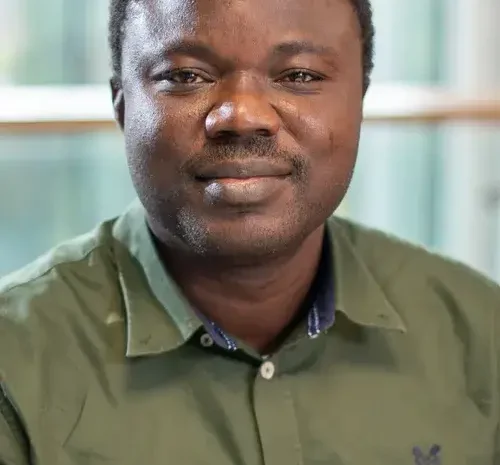
Dr. Ganiyu Olanrewaju Lawal
Dr Ganiyu Olanrewaju Lawal is a UK-based public health and social care researcher, academic, and healthcare professional with expertise in health inequalities, cancer caregiving, qualitative research, and the social determinants of health.
He holds a PhD in Health Studies from the University of Hull, United Kingdom, where his doctoral research employed Constructivist Grounded Theory to explore the experiences of family caregivers supporting people living with cancer in Nigeria. He also holds an MSc in Sociology, an MBA, and a Graduate Diploma in Human Resource Management, and is currently pursuing a Postgraduate Diploma in Social Work.
Dr Lawal has worked as a Lecturer at Coventry University and as a Postdoctoral Research Assistant at the University of Hull, contributing to the NIHR-funded FORALL research programme, which focused on improving inclusivity and engagement in weight management services and research for women living with and beyond breast cancer.
His research interests include health inequalities, cancer survivorship, informal caregiving, patient and public involvement, social care, and equitable access to healthcare. He is particularly passionate about translating research evidence into policies and practices that improve health outcomes for underserved populations.
An advocate of academic excellence and rigorous scholarly inquiry, Dr Lawal contributes to the academic community through research, teaching, and peer review. He was recognised as the Best Reviewer at the 8th International Conference on Public Health and Well-being (Public Health 2026) in acknowledgement of his commitment to research quality and scholarly excellence.
1. Can you briefly introduce yourself and your current academic role?
I am Dr Ganiyu Olanrewaju Lawal, a freelance researcher and educator working at the intersection of Public Health, Sociology and Social care. I hold a PhD in Health Studies from the University of Hull and previously taught public health at Coventry University, Scarborough. My research includes cancer caregiving, health inequalities and worked on the University of Hull’s FORALL breast cancer project. I also hold membership of a UK public health professional society (Society for Public Health) and am completing postgraduate training in social work.
2. What inspired you to pursue a career in your field of expertise?
My motivation developed from a sociological concern with inequality and personal experience of supporting relatives affected by cancer. These experiences made me question how families absorb responsibilities that health systems cannot always meet. Hence my journey into Public Health. My doctoral research explored informal cancer caregiving in southwestern Nigeria, deepening my commitment to understanding how social conditions shape illness, care, access to support and other public health concerns.
3. What motivates you to engage in peer review for academic conferences and journals?
I regard peer review as intellectual stewardship: a responsibility to protect the credibility of research while helping others strengthen their contribution. Reviewers influence which questions, experiences and forms of knowledge receive attention. I therefore aim to combine critical scrutiny with developmental feedback, recognising that a thoughtful review can improve both a submission and a researcher’s confidence.
4. What do you usually look for when reviewing a research paper or abstract?
I examine the alignment between the research question, methodological approach, analysis and conclusions. I ask whether the methods can answer the question and whether the evidence supports the claims. I also consider ethical sensitivity, contextual understanding and public health relevance. For qualitative research, I particularly value reflexivity, analytical depth and meaningful engagement with participants’ accounts.
5. What was your experience like reviewing submissions for Public Health 2026 and iConferences?
Having reviewed public health abstracts for some time, I approach the responsibility with both familiarity and continuing curiosity. Reviewing for Public Health 2026 and iConferences required careful judgement about what each abstract demonstrated within limited space. My public health teaching and research experience informed feedback intended to be rigourous, proportionate and constructive. This recognition strengthens my commitment to that responsibility.
6. In your opinion, what makes a submission stand out?
A strong submission makes its contribution unmistakable: why the problem matters, what the study adds and how the evidence advances understanding. Originality can lie in a neglected population, a fresh interpretation or a well-supported challenge to an established assumption. The strongest submissions demonstrate analytical confidence alongside appropriate restraint about what their findings can establish. I particularly value research that connects people’s lived experiences with practical implications for policy, services or further inquiry.
7. What public health challenges or emerging research areas deserve greater attention today?
I would prioritise the unequal distribution of illness and caregiving responsibilities, particularly where poverty, gender and limited service access intersect. Unpaid carers’ wellbeing, equitable cancer support and the connections between health and social care deserve sustained attention. A central research question for me is: who benefits from an intervention, who remains excluded, and what explains that difference?
8. How can early-career researchers improve their academic writing and presentation skills?
Treat writing as part of analysis. Build a clear argument, distinguish findings from interpretation and make every claim proportionate to the evidence. Read strong papers to understand how their arguments work, seek specific feedback and revise deliberately. In presentations, organise the content around what the audience should understand, remember and question.